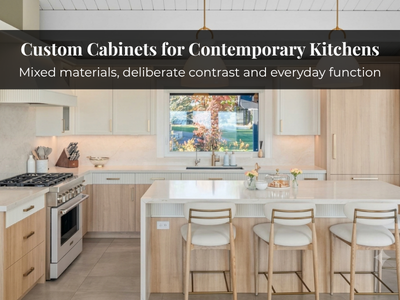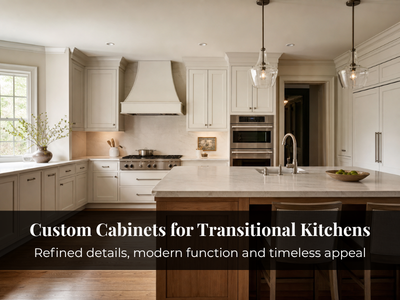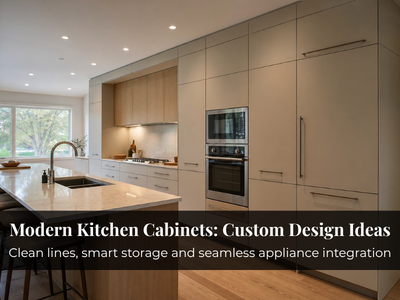
Choosing kitchen cabinets is one of the decisions homeowners tend to spend the most time on, and for good reason. They’re a significant investment, they’re hard to change once installed, and the fear of picking something you’ll regret in a few years is real.
Most homeowners pour their energy into choosing a colour, which makes sense because it’s the first thing you see. But the wood species and finish underneath that colour have a far bigger effect on how your cabinets wear, how much upkeep they need, and how well they hold up over the next 15 to 20 years. These are exactly the questions we work through with Toronto and GTA homeowners during consultations, and the right answers depend as much on how you live as on how things look. Here’s how to think it through.
Why Your Cabinet Material Matters More Than Most Homeowners Expect?
Material affects far more than appearance. It determines how well your cabinets resist daily wear, how they age, how easily they can be refinished later, and how much long-term value they hold. Two kitchens can look nearly identical on installation day and tell completely different stories five years in, simply because of what’s underneath the finish. Getting this right early saves you from expensive regrets down the road.
Solid Wood vs Engineered Materials
There’s a common assumption that solid wood is always the better choice. In practice, the best custom cabinetry usually combines materials, using each where it performs best.
- Solid wood is ideal for door frames, drawer fronts, and anywhere the natural grain will be seen. It’s durable, refinishable, and ages with character. Its main drawback is movement: solid wood expands and contracts with humidity, which matters in Toronto homes that swing from dry winters to humid summers. We factor that seasonal swing into our recommendations more often than most homeowners expect.
- Plywood is our preferred material for cabinet boxes. It’s dimensionally stable, holds screws and hardware well, and resists moisture better than most alternatives, which is why it’s a smart choice under sinks and in older homes with variable humidity.
- MDF is the quiet workhorse behind painted cabinets. Because it has no grain, painted MDF gives you a perfectly smooth, seamless finish with no visible wood lines. It’s excellent for painted doors but not suited to areas exposed to standing water.
The takeaway is simple: don’t insist on solid wood everywhere. A well-designed kitchen uses each material where it makes sense.
Popular Cabinet Woods Compared
If you’re leaning toward a stained or natural look where the grain shows, the species you choose matters more than almost any other decision.
| Wood | Appearance | Durability | Best For | Budget |
|---|---|---|---|---|
| Maple | Smooth, subtle grain | Very hard | Painted or lightly stained cabinets | Moderate |
| Oak | Bold, open grain | Very hard | Traditional and rustic stained looks | Affordable |
| Cherry | Rich, reddens over time | Medium-hard | Warm, elegant stained kitchens | Higher |
| Walnut | Deep, dramatic grain | Medium-hard | Modern, high-end natural finishes | Premium |
A few practical notes we share often:
- Maple takes paint beautifully because its tight grain stays smooth, which is why so many painted cabinets start with it.
- Oak’s pronounced grain is polarizing, so view a full sample before committing. We’ve watched plenty of homeowners fall for oak in a photo and change their mind the moment they hold a real door.
- Cherry naturally darkens and warms as it ages, so expect the colour you install to deepen over the first year or two. Walnut is stunning under a natural finish, and painting over it is something we’d generally steer you away from, since you’d be hiding the very quality you’re paying for.
Choosing the Right Cabinet Finish
Finish is where ownership realities come in, and it’s worth thinking past looks.
- Painted cabinets offer the widest colour range and a clean, contemporary feel, though chips are more visible on darker colours.
- Stained cabinets let the wood grain show through and hide minor wear better than paint, making them forgiving in high-traffic kitchens.
- Natural clear finishes highlight premium woods like walnut and cherry without altering their tone.
The sheen matters just as much. Matte and satin finishes hide fingerprints and smudges far better than gloss, which is why we usually recommend them for family kitchens. Gloss looks striking and reflects light well in smaller spaces, but it shows every fingerprint and needs frequent wiping. In a busy household, satin tends to be the sweet spot.
It helps to think about the parts of ownership nobody photographs. How often are you willing to wipe down doors? Painted finishes clean up easily but show small scratches near handles and around the sink, while stained surfaces disguise everyday nicks and are simpler to touch up if something dings them.
Darker painted colours look dramatic but reveal dust and fingerprints faster, which adds up in a kitchen used three times a day. If you cook constantly and have little patience for maintenance, lean toward a stained or satin finish that ages quietly. If a flawless look matters more than upkeep, a smooth painted finish rewards the extra attention.
Which Combination Fits Your Kitchen?
- Busy family kitchen: stained maple or a satin painted finish that hides daily wear.
- Modern minimalist: natural walnut or a matte painted door in a muted tone.
- Luxury kitchen: cherry or walnut under a natural or satin finish.
- Traditional home: oak or painted maple in a classic profile.
- Small condo kitchen: light painted maple to keep the space feeling open, with a satin or gloss sheen to bounce light. Condos and detached homes tend to have very different priorities here, one leaning on space and light, the other on durability and scale.
- Sunlit kitchen: be cautious with cherry, since strong daylight accelerates its colour change.
Common Mistakes Homeowners Make
- Choosing based only on colour and ignoring how the wood ages. A shade you love today can look dated or uneven once the wood naturally shifts tone over a few years.
- Overlooking maintenance, then being surprised by fingerprints on gloss. The finish that looked perfect in the showroom can become a daily chore in a working kitchen.
- Chasing a trendy finish that feels dated within a few years. Trends move quickly, but cabinets are meant to last well over a decade.
- Approving samples under showroom lighting only. Finishes shift noticeably between bright daylight and warm evening light, and many homeowners change their pick once they see samples at home.
- Painting over premium woods like walnut, which hides their best feature. You end up paying for grain and character you’ll never actually see.
Questions to Ask Before Choosing Your Cabinets
A few honest answers here will narrow your options faster than any showroom visit.
- Do you want a painted look or the natural grain of real wood showing through?
- How much cleaning and maintenance are you realistically comfortable with?
- How much natural light does your kitchen get, and at what times of day?
- Is this your long-term home, or a space you may sell within a few years?
- Does your household include young children, pets, or heavy daily cooking?
How We Help Homeowners Choose with Confidence
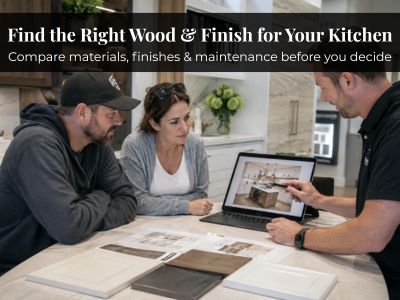
This is exactly where our design process pays off. With over 25 years designing custom cabinetry across the GTA, we sit down with you and compare real wood and finish samples, talk through your lifestyle, maintenance expectations, budget, and the look you’re after before recommending anything. We always suggest viewing samples in both daylight and evening light, because finishes shift noticeably depending on the room. Our cabinets are backed by a 5-year limited warranty and a lifetime warranty on hardware, so the choices you make are built to last.
Ready to Get It Right the First Time?
Choosing the right wood and finish gets far easier when you can hold real samples side by side and talk them through with someone who has seen how each one performs over time. With 25+ years designing kitchens across Toronto and the GTA, we’ll help you weigh appearance, durability, maintenance, and budget together, so the decision feels clear rather than overwhelming.
When you’re ready to compare your options with expert guidance, call us at 416-727-9795 and we’ll help you get it right the first time.